
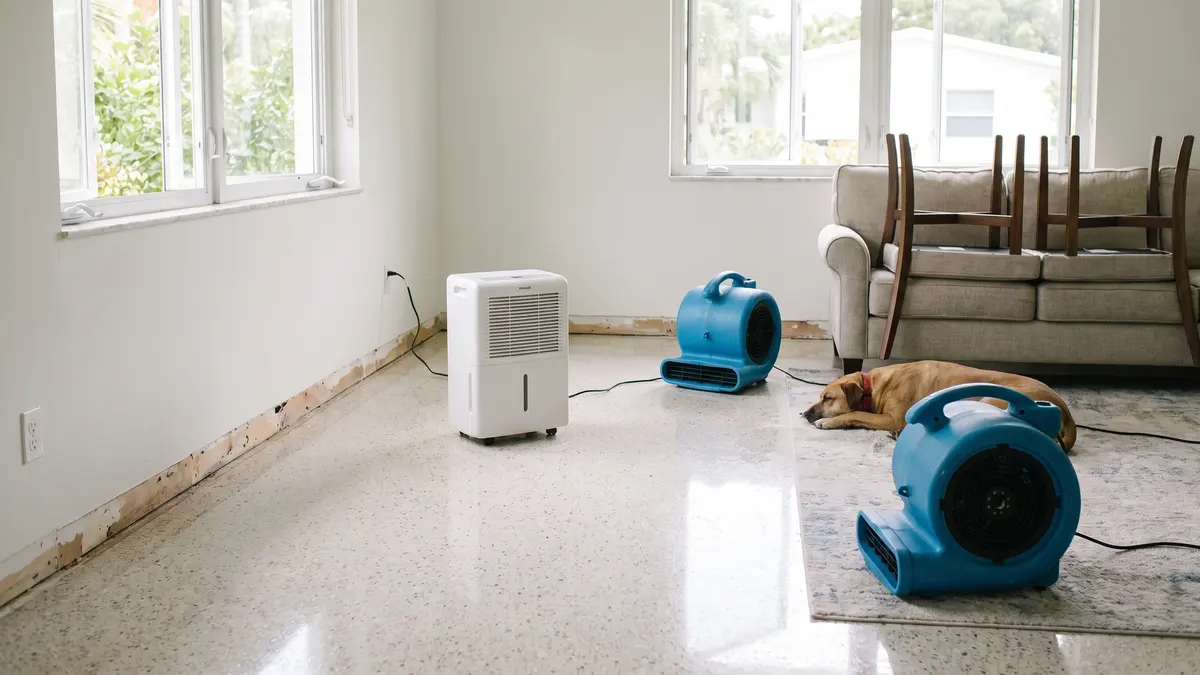
Water damage gets worse with time. A leak that's dried quickly is usually a repair; a leak that sits becomes a mold problem. Here's what to do in the first two days, in the order that matters.
The clock: 24 to 48 hours
The US Environmental Protection Agency says it's important to dry water-damaged areas and items within 24 to 48 hours to prevent mold growth. That's the window everything else is built around: stop the water, document the damage, and start drying.
Step 1: Stop the source and stay safe
- If the water is coming from your plumbing, shut off the main water valve. Our guide to what to do first in a plumbing emergency covers this and what to do if you smell gas.
- The EPA says not to run your heating and air-conditioning system if you know or suspect it's contaminated with mold, because it can spread spores through the house.
- If the water is from a sewer backup or floodwater, the EPA recommends calling a professional with experience cleaning buildings damaged by contaminated water.
Step 2: Document everything for your insurer
Florida's Department of Financial Services tells homeowners to:
- Make the emergency repairs needed to protect the property from further damage.
- Take photos before and after those repairs, and keep the receipts.
- Take photos or video of damaged items, and only throw out items that present a health risk.
- Contact the insurance company before entering any contract for repairs.
If you need help with a claim, the Department's consumer helpline is 1-877-693-5236.
Step 3: Dry it out, or call a pro
Small, clean-water spills you catch quickly can often be dried with fans, dehumidifiers and open windows. Bigger jobs, water inside walls or under floors, and anything contaminated are where a water damage restoration company earns its fee: they bring industrial drying equipment and measure moisture until the structure is actually dry.
If you see mold
The EPA says most people can clean up small mold areas themselves, but if mold covers more than about 10 square feet, follow the EPA's professional remediation guidance, which in practice means hiring a pro.
In Florida, mold work is licensed. Mold assessors (who test and write the plan) hold an MRSA license, and mold remediators (who remove it) hold an MRSR license. You can check either on the state license search or with our free license check.
Who controls your insurance claim
For residential property insurance policies issued on or after January 1, 2023, Florida law says you can't assign your post-loss insurance benefits to a contractor; any attempt to do so is void. In practice, that means you stay in charge of your own claim. Be wary of anyone who asks you to sign over your benefits.
The 48-hour checklist
- Stop the water and make the home safe.
- Photograph and video everything before and after emergency repairs.
- Keep every receipt.
- Call your insurance company before signing a repair contract.
- Start drying within 24 to 48 hours.
- For mold over about 10 square feet, use a licensed remediator, and a separate licensed assessor if you want testing.