
In South Florida, an AC that stops cooling is more than uncomfortable. Before you book a service call, a few simple checks can sometimes fix the problem, and they'll help you describe it clearly when you do call a pro.
Check 1: The thermostat
It sounds obvious, but it's the first thing ENERGY STAR lists for a reason: check the thermostat settings. Make sure it's set to cool, the temperature is set below the room temperature, and the fan setting is what you expect. If the thermostat runs on batteries and the screen is blank or dim, that's worth a look too.
Check 2: The air filter
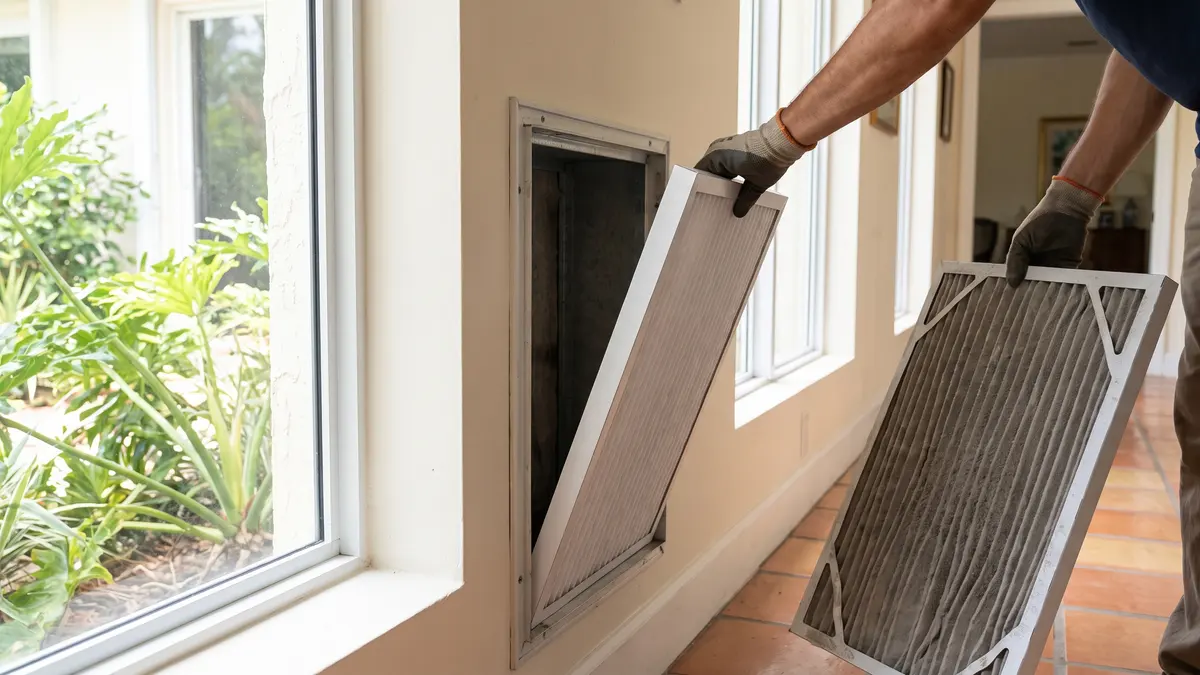
ENERGY STAR recommends inspecting, cleaning or changing air filters once a month, especially in heavy-use months. A clogged filter restricts airflow, and in Florida the AC rarely gets a break. If yours is grey and caked with dust, replace it with the same size and check again after the system has run for a while.
Check 3: The condensate drain
Your AC pulls water out of the air and drains it away through a condensate line. ENERGY STAR warns that a plugged drain can cause water damage in the house. If you see water around the indoor unit, standing water in the drain pan, or a drip where there shouldn't be one, mention it when you call.
What to leave to a pro
If those checks don't fix it, the cause is usually inside the system: refrigerant, electrical parts, the compressor or the outdoor unit. That's technician work.
- Refrigerant needs a certified technician. The EPA requires technicians who maintain, service, repair or dispose of equipment that could release ozone-depleting refrigerants to hold Section 608 certification. Checking the refrigerant level is part of a professional tune-up, not a homeowner job.
- Ask what they'll check and what it costs before they start, and get any repair quote in writing.
Who's licensed to work on your AC
In Florida, AC contractors are licensed by the state:
- Class A air-conditioning contractors have no size limit.
- Class B contractors are limited to 25 tons of cooling and 500,000 Btu of heating in any one system, which covers typical homes.
- Mechanical contractors also cover central air.
On the state's license records, look for CAC (certified air conditioning), RA (registered), or CMC / RM (mechanical). You can check a license in two minutes with our free license check.
If you need a new system: permits
Replacing a central AC is permitted work. Broward County's Building Code Division lists A/C replacement or changeout as a permit, with documents such as the county's uniform data form for AC replacements, an AHRI certificate and an anchoring detail. That packet covers unincorporated Broward and the cities that contract with the county; if you live in a city with its own building department, check with your city. A licensed contractor normally pulls the permit for you.
If the AC replacement costs $15,000 or more, Florida's permit rules for the Notice of Commencement also come into play. Our guide to the Notice of Commencement explains what that means for you.
Before you call
Write down what you checked, when the problem started, whether the indoor and outdoor units are running, and anything you heard or saw. It helps the technician, and it helps you compare quotes on the same scope.